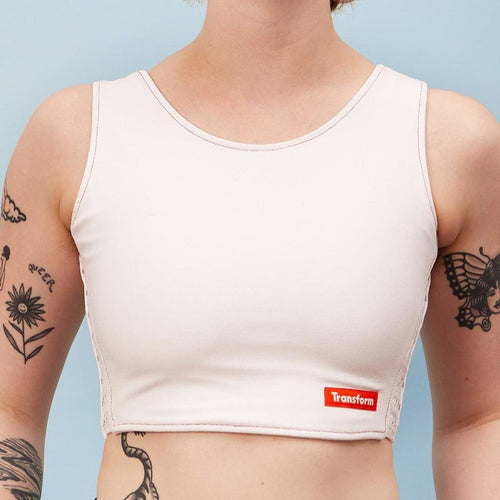

Choosing the best chest binder can make a significant difference to comfort, fit and everyday confidence. Many people searching for the best chest binder want to understand how binders work, how to measure correctly and how different brands compare.
Chest binders are compression garments designed to flatten the chest by redistributing chest tissue across the torso. For many trans masculine and nonbinary people, a well-fitted binder can help clothing sit more comfortably and create a flatter chest profile under everyday clothing.
However, not all binders are the same. Different designs vary in compression strength, fabric, breathability and overall comfort. Understanding what to look for in a binder can help you choose a garment that works best for your body.
If you are new to binding, our Complete Guide to Chest Binding explains how chest binders work and how to measure correctly.
The best chest binder is not necessarily the one with the strongest compression. Instead, the best binder balances compression with comfort and allows natural breathing and movement throughout the day.
Several factors influence how a binder performs.
Correct sizing is one of the most important factors when choosing a binder. A binder that fits properly can provide effective compression without excessive pressure on the ribs or chest.
Taking accurate measurements is important before choosing a binder. Our Chest Binder Size Guide explains how to measure your chest and rib cage.
Compression fabrics vary widely. Some binders use very stiff materials that provide strong compression but may feel restrictive.
Others use stretch fabrics that combine compression with flexibility and breathability. Breathable fabrics can help improve comfort during everyday wear.
The design of a binder also affects comfort. Well-constructed binders distribute compression evenly across the torso rather than concentrating pressure in one area.
Features such as reinforced panels and flexible stretch zones can improve both comfort and durability.
People with larger chests often look for binders that provide effective compression while still allowing comfortable breathing and movement.
A well-designed binder should distribute compression evenly across the torso rather than placing excessive pressure on one area of the chest.
Several factors may be particularly important when choosing a binder for a larger chest.
Strong compression can help create a flatter chest profile, but extremely rigid fabrics may feel restrictive.
Binders that combine compression with stretch fabrics often provide a more comfortable balance.
Binders designed with reinforced panels or structured compression zones can help distribute pressure more evenly across the chest.
Accurate measurements are especially important when choosing a binder for a larger chest.
Our Chest Binder Size Guide explains how to measure correctly.
Breathable fabrics may help improve comfort during everyday wear, particularly in warmer climates.
Another common question when choosing the best chest binder is how long it can be worn.
Many commonly shared guidelines suggest limiting binder wear to around eight hours at a time and removing the binder before sleeping.
Comfort levels can vary depending on individual bodies and daily activities.
Our guide How Long Can You Wear a Binder explains this topic in more detail.
Because binders compress the chest and torso, wearing them responsibly is important.
Commonly shared safety practices include:
choosing the correct binder size
limiting wear time
taking breaks from binding
removing binders before sleeping
Our Chest Binder Safety Guide explains these recommendations in more detail.
Chest binders are typically sold by brands specialising in gender-affirming apparel.
When choosing where to buy a binder, it can be helpful to look for brands that focus on garments designed for trans bodies and everyday comfort.
You can explore our chest binder collection to see compression garments designed for everyday wear.
The best chest binder is one that fits correctly, provides comfortable compression and allows natural breathing and movement.
Choosing the best binder involves measuring your chest and rib cage, selecting the correct size and choosing a design that balances compression with comfort.
When worn responsibly and in the correct size, many people wear chest binders comfortably as part of everyday clothing.
A binder should feel snug and supportive but should not cause pain or restrict breathing.