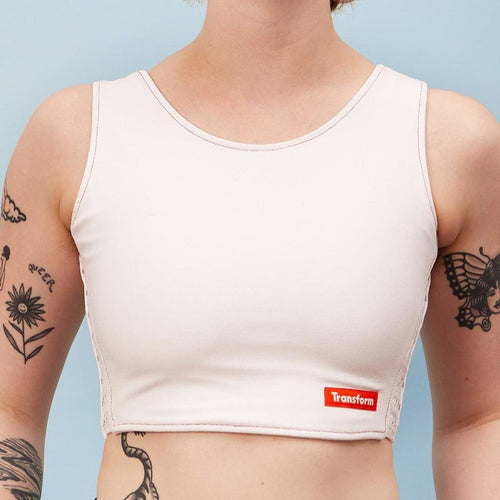

Chest binding is the practice of flattening the chest using a compression garment known as a chest binder. Many trans masculine people, nonbinary people and others experiencing chest dysphoria choose to bind their chest to create a flatter appearance under clothing.
For some people, binding allows clothing to fit more comfortably and may reduce feelings of dysphoria. Others bind occasionally depending on the situation or activity.
A chest binder works by compressing and redistributing chest tissue to create a smoother chest profile. Binders designed specifically for this purpose use structured stretch fabrics that provide compression while still allowing movement and breathability.
When worn responsibly and in the correct size, binders can be used comfortably as part of everyday clothing.
A chest binder is a compression garment designed to flatten the chest.
Unlike sports bras or compression shirts, binders are constructed specifically to redistribute chest tissue and create a flatter chest profile.
Binders are commonly worn by:
trans masculine people
nonbinary people
people experiencing chest dysphoria
people seeking a flatter chest profile
You can explore our chest binder collection to see garments designed specifically for this purpose.
If you're new to binding, the Adjustable Crop Binder is a good first binder — its multiple side fastenings let you ease into binding at a looser setting, then tighten gradually as you get more comfortable.
Binding should always feel comfortable. Start with shorter wear times and a looser setting, and gradually work up to longer wear and firmer compression as your body adjusts. Loosen or remove your binder any time something feels uncomfortable.
Research into chest binding has increased in recent years.
One of the most widely cited studies is the Binding Health Project, which surveyed more than 1,800 people with experience of binding. The study found that binding often provides significant psychological benefits, including relief from chest dysphoria and improved comfort in daily life.
However, participants also reported physical symptoms related to binding.
Commonly reported symptoms included:
back or shoulder pain
shortness of breath
skin irritation
chest discomfort
The research also found that binding frequency was associated with higher rates of symptoms, meaning that people who bound more frequently were more likely to report physical discomfort.
Because of this, most health guidance focuses on risk-reduction practices rather than discouraging binding entirely.
Because binders compress the chest, wearing them responsibly is important.
Commonly shared safety guidance includes:
wearing a binder for no more than around eight hours at a time
removing binders before sleeping
taking breaks when possible
choosing a binder that fits correctly
Listening to your body and removing the binder if discomfort occurs can help reduce symptoms.
You can read more in our Chest Binder Safety Guide.
Exercise while binding is a question we hear often — and the answer is more positive than many people expect.
The traditional advice to avoid exercise in a binder was based on older binder designs that use rigid internal panels. Those panels restrict the natural expansion of your ribcage when you breathe — which creates genuine difficulty during physical activity. That advice does not apply to Transform binders.
All Transform binders are constructed using layered compression fabric with no rigid internal paneling. This allows your ribcage to expand naturally during exercise and means the binder moves with your body rather than fighting against it. If your binder fits correctly and feels comfortable and supportive during movement, exercise is possible across a wide range of activities.
This is backed by recent Australian research. A study by the Mental Health & Exercise Research Group (MHEX), conducted with researchers from the University of Western Australia, Curtin University, UNSW Sydney and Thriving in Motion, found that wearing a chest binder did not significantly affect lung function, strength, or aerobic capacity during maximal exercise testing.
As with all binding, comfort is your guide:
Read our complete guide to chest binding for exercise and sport for activity-by-activity guidance.
Selecting the correct binder size begins with accurate measurements.
Measure around the fullest part of your chest while keeping the measuring tape level around your body.
Measure around your rib cage directly underneath the chest.
Compare these measurements with the sizing chart for the binder you are considering.
Our Chest Binder Size Guide provides step-by-step instructions.
For larger chests, correct sizing and even compression distribution matter most. Transform binders are available in sizes XXS to 5XL and are designed to provide comfortable, even compression across a full range of chest sizes.
A binder that is too tight may cause discomfort or restrict breathing.
Possible signs of poor fit include:
chest or rib pain
breathing difficulty
skin irritation
pressure marks that do not fade quickly
If these symptoms occur, removing the binder and reassessing the size may help.
Many commonly shared recommendations suggest limiting binder wear to around eight hours at a time.
Yes — if your binder is designed without rigid internal paneling. Transform binders use layered compression fabric that allows your ribcage to expand naturally during exercise, which means they can be worn during physical activity. Ensure your binder fits correctly and feels comfortable before you start, and remove it if you experience any pain or difficulty breathing. Read our full guide to chest binding for exercise and sport.
A binder should feel snug but should not cause pain or restrict breathing.
What is Chest Binding?
Best Chest Binders for Beginners
Best Chest Binder: How to Choose the Right Binder
Chest Binder Size Guide
Chest Binding at School and Work: A Practical Guide for Students and Employees in the US