
I'm new to chest binding — where do I start?
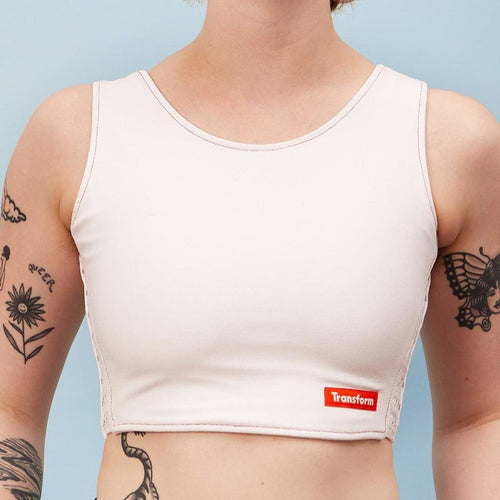
The best place to start is with our Adjustable Crop Binder. It has multiple side fastenings that let you ease into binding on looser settings, then tighten gradually as you get more comfortable.
The most important thing to remember is that binding should always feel comfortable. Start with shorter wear times and a looser setting, and gradually work up to longer wear and firmer compression as your body adjusts.
Always follow your comfort — loosen your binder or remove it if anything feels uncomfortable.
How do I get the right fit?
You can find sizing instructions and a size chart on each product page. Measure around the fullest part of your chest and around your rib cage just below the chest, then compare those measurements to our size chart.
If you fall between sizes, we generally recommend going up a size for a more comfortable fit.
Can I wear my chest binder while exercising?
Yes — provided your binder is correctly fitted and designed without rigid internal paneling.
The traditional advice to avoid exercise in a binder was written for binders with rigid internal panels — those panels restrict your ribcage from expanding when you breathe, which makes physical activity difficult. Transform binders contain no rigid paneling. Instead, we use layered compression fabric that moves with your body and allows your ribcage to expand naturally during exercise.
If your binder feels comfortable and supportive, you can wear it during physical activity — gym sessions, running, team sports and more. Remove it immediately if you experience pain, difficulty breathing, or dizziness.
Read our full guide: Chest Binding for Exercise and Sport
Can I wear my chest binder while sleeping?
No. We recommend removing your binder before sleep and giving your body time to rest overnight. Wearing a binder while sleeping can restrict breathing and prevent your chest and back muscles from recovering.
How do I measure for my chest binder?
You'll find measurement instructions and a size chart on each product page. You'll need two measurements: around the fullest part of your chest, and around your rib cage directly underneath the chest.
Our Chest Binder Size Guide walks through the process step by step.
What if I don't have a tape measure?
If you've worn a bra before, you can try our bra size conversion table as a starting point. That said, we always recommend measuring with a tape measure for the most accurate fit — tape measures are inexpensive and available at most drugstores.
Is chest binding safe?
The short answer is: it depends on several factors.
There are four key things that affect chest binder safety:
Poor design and poor fit can contribute to negative physical outcomes such as rib pain and skin irritation. Binding frequency also plays a significant role — people who bind more frequently are more likely to experience discomfort.
Most health guidance focuses on risk-reduction practices rather than discouraging binding entirely, because for many people the psychological benefits of binding significantly outweigh the physical risks when binding is done safely.
For more information, see our Tips for Safe Binding.
What has Transform done to make our binders safer?
Not all chest binders are created equal. Most traditional binders use a rigid internal panel over the chest area to create compression. That rigidity restricts breathing and movement, which is why we don't use it.
We spent three years developing our designs specifically to prioritize safety and comfort. Our compression comes from the compression fabric itself — multiple layers of soft stretch fabric — rather than a rigid flattening panel. This means you shouldn't experience restricted breathing or restricted movement when wearing a correctly fitted Transform binder.
Fit is also critical, which is why every product page includes detailed sizing guidance to help you find the right size for your body.
Are chest binders with hooks safe?
Yes — hooks are not inherently problematic. They're used on bras, sports bras and medical compression garments. The hooks on our Adjustable Crop Binder are simply a way of making the binder easier to put on and take off.
We include hooks on both sides of our adjustable crop binders to ensure compression is distributed evenly — uneven distribution from a single-sided opening has been raised as a concern in the past.
When sized correctly and worn following our safety guidance, hook binders should feel comfortable. You should be able to move and breathe freely. If you can't, the binder is likely too small or doesn't fit your body correctly.
How do I wash my chest binder?
We recommend cold machine washing in a laundry bag, or hand washing, and then hanging to dry in the shade. Avoid tumble drying — heat degrades the elasticity of the compression fabric over time.
For our swim binders, rinse in cold water after each swim to prevent color fading and extend the life of the garment.
I'd like a chest binder but I'm nervous about it arriving in the mail — what should I do?
Our parcels arrive completely unbranded. The packaging gives no indication of what's inside or who it's from — so there's nothing to worry about.
How are the chest binders labeled?
Our chest binders carry the 'Transform' brand label only. There is no reference to 'Transwear' on the garment itself.
How long will my order take to arrive?
We ship to the US with a 3–9 business day delivery timeframe, depending on the shipping option you choose (standard or express).