



Starting to bind for the first time is a significant moment. Getting the right binder from the beginning — and knowing how to use it safely — makes a real difference to your experience, your comfort, and your long-term binding health.
This guide covers the best chest binders for beginners, how to choose the right style for your body, and everything you need to know to start binding safely.
What to Look for in Your First Binder
The most important thing your first binder needs to do is fit correctly. A binder that is too small creates health risks; one that is too large won't provide effective compression. Beyond fit, the key factors for beginners are:
- Ease of putting on and taking off — important when you're new to binding
- Adjustable compression — lets you ease in gradually rather than starting at maximum compression
- No rigid internal paneling — allows your ribcage to expand naturally while breathing
- Comfortable enough for extended wear as you build up your daily binding time
Our Recommendation for Beginners: The Adjustable Crop Binder
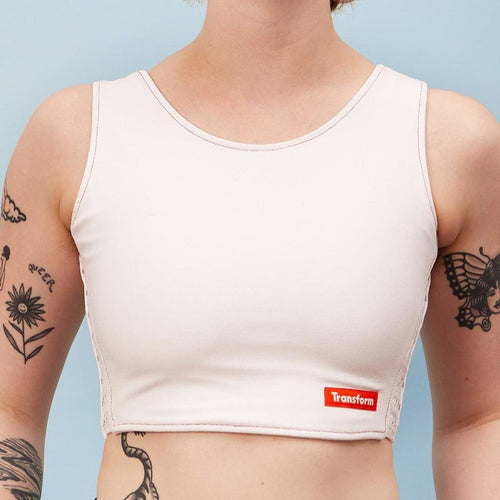
For most people new to binding, we recommend starting with our Adjustable Crop Binder. Here's why it works so well as a first binder:
Adjustable Compression
Unlike pull-on binders that have a fixed compression level, the Adjustable Crop Binder has side fastenings that let you control how tight the binder sits. You can start on a looser setting and gradually tighten as your body adjusts to binding over days and weeks. This makes the learning curve much gentler.
Easier to Put On and Take Off
Hook fastenings on both sides make this binder significantly easier to get on and off than a pull-on style — particularly important when you're new to binding and still getting used to the process. The dual-side fastenings also distribute compression evenly.
No Rigid Paneling
Like all Transform binders, the Adjustable Crop contains no rigid internal panels. Rigid panels restrict your ribcage from expanding when you breathe, which can cause discomfort — particularly during physical activity. Our layered compression fabric provides effective flattening while still allowing natural breathing movement.
Other Styles Worth Considering
Limited Edition Crop Binder — For Active Beginners
If you plan to be physically active while binding — gym sessions, sports, running — our Limited Edition Crop Binder is worth considering from the start. Its tapered rib cut creates a snug, contoured fit that stays in place during movement. Like all our binders, it contains no rigid paneling.
Sensory Compression Vest — For Sensory Needs or Health Conditions
If you have sensory processing differences, chronic pain, or a health condition that makes tighter fitting garments uncomfortable, the Sensory Compression Vest may be the better starting point. Its straight cut (no tapering at the ribs) provides more evenly distributed, gentler compression. It's our most accessible binder style.
Tank Binder — For Larger Chests
If you have a larger chest or a higher volume of chest tissue, the Tank Binder is designed for you. The longer length provides more surface area for compression to distribute across, which can be more effective and more comfortable for larger chests than a crop style.
How to Find Your Size
Getting the right size is the single most important thing you can do as a new binder wearer. You'll need two measurements:
- Around the fullest part of your chest
- Around your rib cage directly below your chest
Compare these measurements to the size chart on each product page. If you fall between sizes, go up a size. A binder that is too small is more likely to cause discomfort, restrict breathing, or cause injury over time.
How to Start Binding Safely
These guidelines are especially important when you're new to binding:
Build Up Gradually
Start with shorter wear times — two to three hours — and build up gradually as your body adjusts. Most people work toward wearing their binder for up to eight hours comfortably over a period of days or weeks. Don't rush this process.
Never Sleep in Your Binder
Remove your binder before sleeping every night without exception. Overnight binding restricts breathing and prevents your chest and back muscles from recovering.
Take Breaks When You Can
Removing your binder when you get home, or scheduling one binder-free day per week, helps your body recover and reduces the risk of long-term discomfort.
Listen to Your Body
Pain, difficulty breathing, dizziness or skin irritation are signals to remove your binder immediately. These symptoms often mean the binder is too tight or the fit isn't right. Never push through discomfort.
Take Deep Breaths When You Remove It
After taking your binder off, take several slow deep breaths to allow your chest and back muscles to stretch and recover. This is especially helpful after longer wear periods.
Common Questions from First-Time Binders
Will binding hurt?
A well-designed and correctly fitted binder should not hurt. It will feel snug and you'll be aware of the compression, but pain is not normal. If you experience pain, the binder is likely too small or the wrong style for your body. Reach out to us for sizing guidance before trying a smaller size.
How long does it take to get used to binding?
Most people feel more comfortable within a week or two as their body adjusts to the sensation of compression. Starting with shorter wear periods and looser settings (on the Adjustable Crop) helps significantly.
Can I exercise in a binder?
Yes — Transform binders contain no rigid internal paneling, which means your ribcage can still expand naturally during exercise. Start with lower intensity activities first and build up as you get comfortable. Remove your binder if you experience any difficulty breathing.
Further reading: Chest Binding for Exercise and Sport
What if my binder doesn't feel right?
Contact our team — we're happy to help with fit questions. If the size genuinely isn't right we can advise on whether to size up or try a different style.
Ready to Start?
Browse our full chest binder range — every binder is designed without rigid internal paneling, with inclusive sizing and detailed size guidance to help you find the right fit from the start.
Further Reading: Tips for Safe Binding


