






Over the past year, the landscape for trans health care in the United States has shifted significantly. For trans and gender-diverse people, their families, and their allies, keeping up with these changes — and understanding what they actually mean in practice — can feel overwhelming.
This article is designed to cut through the noise. We'll explain what has changed at the federal level, who is most affected, what remains protected, and how these changes relate to gender-affirming products like chest binders and compression wear. We've also included practical guidance for accessing affirming products safely and legally.
Our goal is to provide clarity, not alarm.
What Has Changed at the Federal Level?
Recent federal policy changes have primarily focused on healthcare coverage, funding, and how gender-affirming medical care is defined within federally administered programs. The key areas affected include:
Federal employee health plans Changes to what procedures and treatments are covered under plans administered for federal employees have created uncertainty for many people who rely on these plans.
Federally funded healthcare programs Programs that receive federal funding — including some Medicaid-administered services — have faced new guidance around coverage of gender-affirming medical care. This varies significantly by state.
How gender-affirming care is defined federally At the federal level, there has been a shift in how gender-affirming medical care is categorised and regulated. This affects everything from insurance coverage decisions to how medical providers document and bill for services.
It's critical to understand: these changes are about healthcare coverage and regulation. They are not about personal identity, expression, or the clothing and products people choose to wear.
Who Is Most Directly Affected?
The people most immediately impacted are those who rely on:
- Federal health insurance plans (including plans for federal employees and their families)
- Federally administered or funded healthcare programs
- Healthcare providers who operate under federal funding agreements
Even within these groups, experiences vary widely depending on:
- State-level protections — many states have their own laws protecting access to gender-affirming care that operate independently of federal policy
- Court challenges and injunctions — several federal policy changes are currently being challenged in court, which has paused or limited their effect in some jurisdictions
- Individual healthcare providers — some providers have proactively committed to continuing care regardless of federal guidance
If you or someone you care about is unsure how these changes affect your specific situation, organisations like the National Center for Transgender Equality and Lambda Legal offer up-to-date legal guidance and support.
How State Laws Still Protect Many People
One of the most important things to understand is that federal policy changes do not automatically override state law.
Many US states continue to:
- Protect access to gender-affirming care through state legislation
- Maintain anti-discrimination laws that apply regardless of federal policy shifts
- Fund gender-affirming healthcare independently of federal programs
States including California, Colorado, Illinois, Minnesota, New York, Oregon, and Washington have passed legislation specifically protecting access to gender-affirming care. If you live in one of these states, your access to care may be significantly more protected than federal-level news coverage suggests.
For parents and allies supporting a young trans person: your state's laws are often the most relevant factor in determining what care is available. Resources like the ACLU's map of trans rights by state are updated regularly and provide clear, state-by-state information.
Understanding Chest Binders and FDA Regulation
This is an area of particular concern for our community, and we want to address it directly and accurately.
In late 2025, the FDA issued warning letters to a number of companies selling chest binders, stating that certain marketing claims — specifically those describing binders as treating or mitigating gender dysphoria — may subject those products to Class I medical device regulation.
What this means: The FDA's concern is specifically about how products are described and marketed, not the products themselves. A chest binder described as a treatment for a medical condition falls under a different regulatory category than a chest binder described as a compression garment or apparel item.
What this means for you:
- Chest binders remain legal to sell and purchase
- Access to chest binders is fully maintained
- You can continue to buy and wear binders without restriction
Companies can continue to sell binders by marketing them clearly as apparel or compression garments — which is exactly how they function for the vast majority of people who wear them.
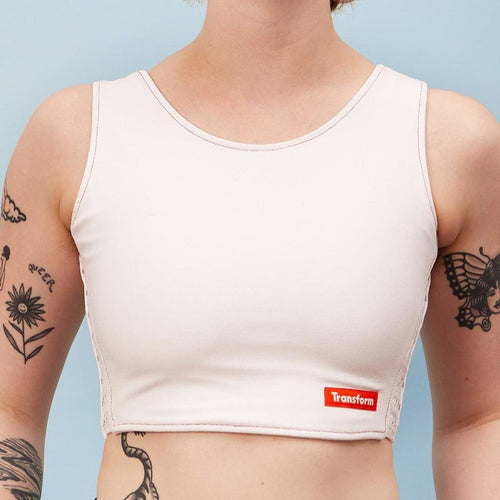
At Transform Transwear, our products have always been designed and marketed as clothing and compression apparel. This isn't a recent change in response to regulation — it reflects how we've always understood and described what we make. Our binders are garments designed for comfort, confidence, and self-expression.
What This Means for Gender-Affirming Apparel
Gender-affirming products including chest binders, compression garments, packing underwear, and gender-affirming swimwear remain fully available and legal across the United States, provided they are described as clothing or personal garments rather than medical treatments.
For people who have had top surgery, post-operative compression garments are an important part of recovery. Our Post-Operative Compression Vest is designed specifically for this purpose — offering gentle, even compression to support healing, reduce swelling, and improve recovery outcomes. It is designed as a compression garment, not a medical device, and is available to customers across the US.
A Note for Parents and Allies
If you're reading this as a parent, family member, or ally of a trans or gender-diverse person, we want to acknowledge that navigating this landscape on behalf of someone you love adds an extra layer of stress and responsibility.
Here's what we'd encourage you to remember:
Access to affirming clothing is not affected by these changes. Whatever is happening at the federal level in terms of medical care coverage, your ability to support a trans person in your life with affirming clothing and compression wear remains unchanged.
Information matters more than ever. Misinformation about what is and isn't legal spreads quickly. Sticking to credible sources — trans-led organisations, legal advocacy groups, and healthcare providers with experience in trans care — will help you support your loved one with accurate, grounded information.
Community support is invaluable. Organisations like PFLAG offer resources specifically for families and allies navigating these conversations.
Transform Transwear's Commitment
Transform Transwear was founded to serve trans and gender-diverse people with thoughtfully designed, affirming clothing. That mission doesn't change with the political landscape.
We are committed to:
- Monitoring regulatory and policy developments carefully and sharing updates in plain language
- Ensuring our products are clearly positioned as apparel — not medical devices — so they remain accessible to our community
- Continuing to serve the US community with the same care, respect, and quality we always have
We will continue to publish updates here as the situation evolves. If you have specific questions about our products or how current regulations affect what we sell, please don't hesitate to reach out to us directly.
Key Takeaways
- Federal policy changes affect healthcare coverage and funding — not personal identity, expression, or clothing
- State laws remain a major factor in determining what healthcare is available and accessible
- Chest binders remain legal and accessible — the FDA's concern is specifically about how products are marketed
- Gender-affirming apparel including binders, compression wear, and swimwear remains fully available across the US
- For post-op recovery, our Post-Operative Compression Vest is available and unaffected by current regulatory changes
Simone Kelly is the founder of Transform Transwear, a US and Australia-based gender-affirming clothing brand designed with and for the trans community. This article is intended for informational purposes and does not constitute legal or medical advice. For legal guidance, please consult a qualified attorney or contact a trans rights organisation.
Sources:


